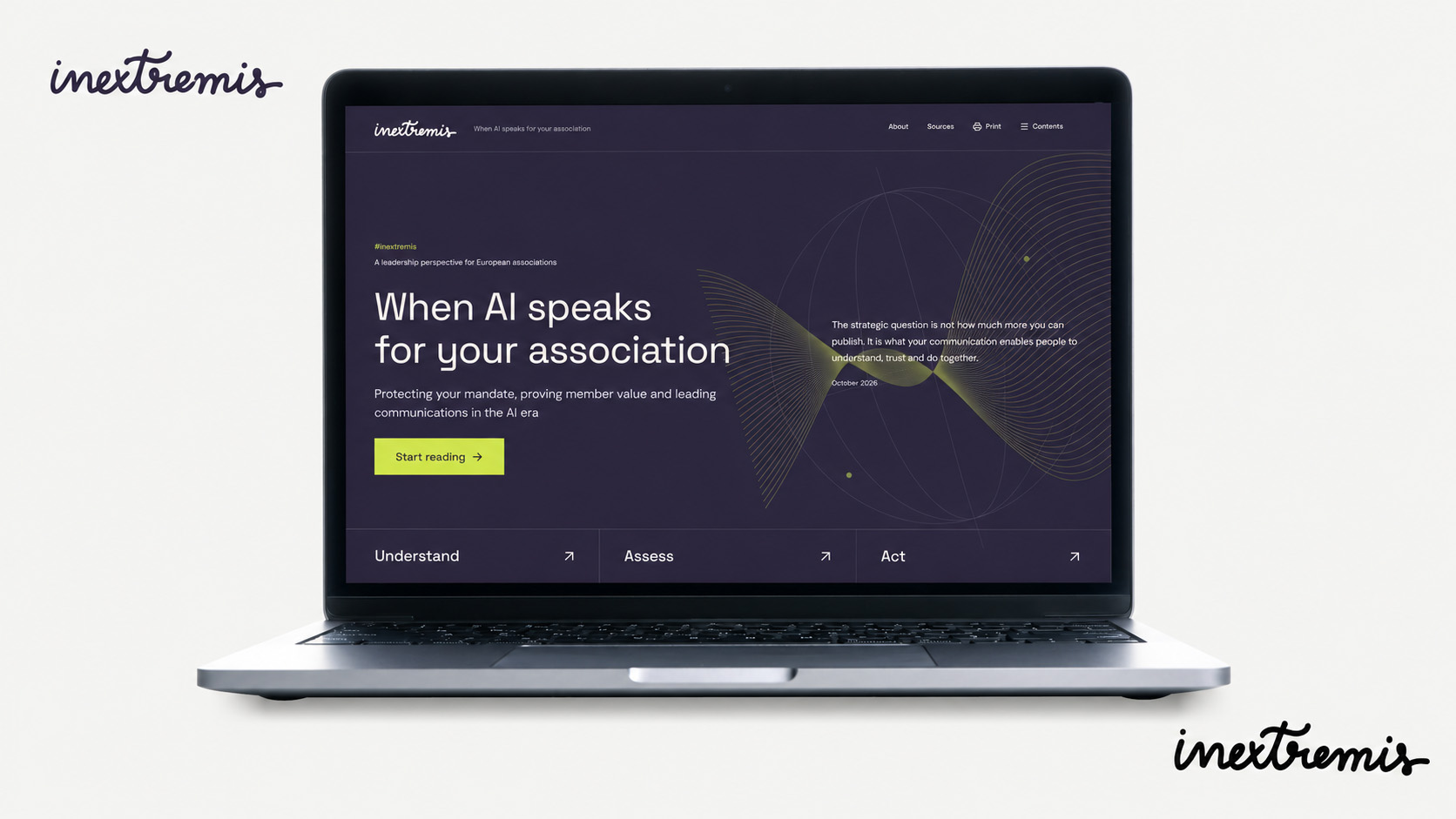
Understand. Assess. Act.
That is the structure behind “When AI speaks for your association” — and its most interesting digital design choice.
Each section gives the reader a different task: explore the argument, reflect on current practice, then work through practical tools.
The navigation supports that progression without prescribing a single route. A contents menu, chapter selector and previous/next links let readers move between the wider narrative and a particular question. Individual chapter links also make it straightforward to share a relevant passage with a colleague.
Then the format changes with the task.
The reading pages use a restrained palette, generous spacing and a clear hierarchy of titles, introductions and subheadings. The assessment introduces numbered dimensions and visible progress. The practical section provides four worksheets with fields to complete.
These choices give the publication a role beyond the first read. A chapter can inform a conversation; a worksheet provides somewhere to develop it.
There is also a dedicated print view, while sources and editorial method remain accessible from the header.
For communication leaders, this is a useful question to bring into a publication brief: what should readers be able to do with the content once they have understood it?
Here, the answer is built into the structure.
If you are considering how to connect a substantial publication with everyday communication work, this is worth exploring: https://ai4association.org/