A facilitated strategy workshop in progress: a participant captures group input on a whiteboard while others follow a large-group conversation framework projected behind her

Move from discussion to shared decisions and practical action.

Senior-facilitated workshops for European organisations that need to turn distributed expertise, competing perspectives or an emerging challenge into a decision people can support — and a usable basis for action.

Why a workshop

Use a workshop when participation will improve the decision.

The answer often belongs inside your organisation. The value of the workshop is to make that knowledge visible, comparable and usable.

The knowledge is already inside your organisation. The difficulty is making it visible, bringing different perspectives into the same room and turning them into choices people can support and use.

A #inextremis workshop creates a structured space for that work. It is participative without becoming vague, strategic without becoming abstract, and designed to leave a practical basis for what happens next.

Not every assignment needs a workshop.

When the decision and brief are already clear — for example, for a website, publication or video — we move directly into the appropriate focused assignment. A workshop is proposed only when participation and structured decision-making will improve the result.

  • 01

    A communication strategy needs to be reviewed or redefined.

  • 02

    Teams, leadership or members need to align around priorities.

  • 03

    A campaign, programme or flagship event needs a shared foundation.

  • 04

    Social media activity needs a clearer operating model.

  • 05

    AI is being adopted faster than shared standards and judgment.

  • 06

    A capable team needs fresh creative momentum.

We define the required output before the session. A workshop is successful because it changes what the organisation can decide or do next — not because the room felt energetic.

Four workshop families

Four workshop families, each built around a decision.

These are not off-the-shelf formats. Each workshop is shaped around the decision, the people who hold relevant knowledge or ownership, the evidence available and the output the organisation needs afterwards.

1. Communication Strategy Assessment

Key question
What is working, what is fragmented and what must change first?
Best when
When the strategy is outdated, implicit or no longer shared.
We work on
Evidence, mandate, audiences, channels, roles, governance and gaps.
You leave with
A shared assessment, priorities, a decision framework and the next strategic step.

2. Campaign and Communication Programme Lab

Key question
What are we trying to change, with whom and through which coordinated actions?
Best when
When you are shaping a campaign, annual communication programme, flagship event or member-led initiative.
We work on
Objective, stakeholders, intended movement, messages, sequence, channels, roles and measures.
You leave with
Campaign foundations or a programme architecture, with an action roadmap.

3. Social Media Task Force

Key question
How can the team and members work together without multiplying approvals and disconnected posts?
Best when
When social output exists but the organisation lacks a common operating system.
We work on
The role of each channel, content pillars, voices, member contributions, approvals, rhythm, escalation and measurement.
You leave with
A task-force model, responsibilities, workflow, editorial logic and a pilot plan.

4. Creativity and AI Activation

Key question
How can we generate stronger ideas and use AI without losing judgment, quality or organisational voice?
Best when
When a capable team wants practical capability rather than a generic tool demonstration.
We work on
Creative methods, prompts and use cases, human checks, voice, risk and experimentation.
You leave with
Reusable methods, prompt and decision patterns, guardrails and the next experiments.

Typical applications

The four workshop families can be adapted to a specific organisational moment, including:

    The four workshop families can be adapted to a specific organisational moment. A format may draw on one family or combine selected elements from several. We include only what materially improves the decision and its implementation.

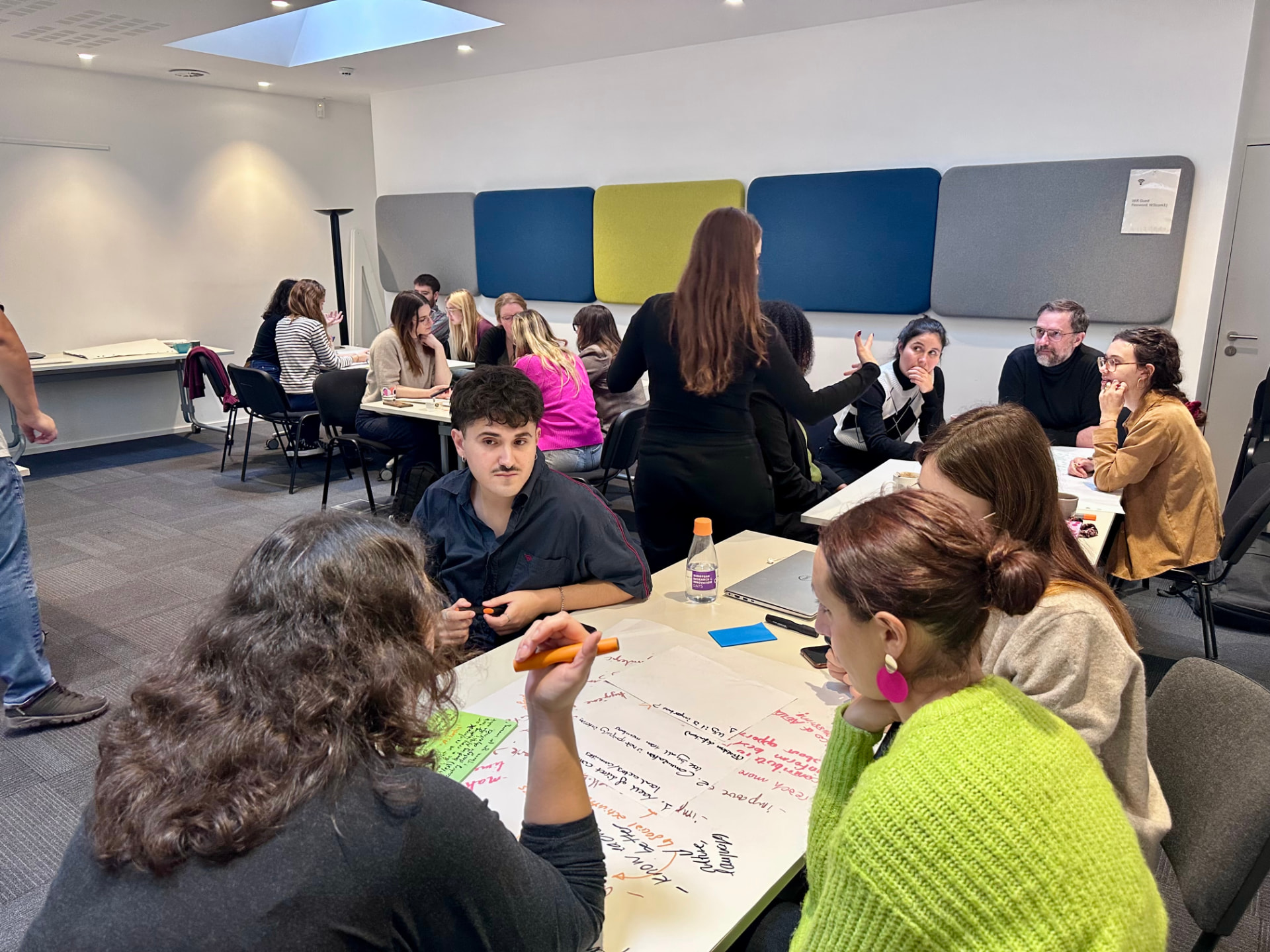
    A facilitated #inextremis workshop in progress: participants at several tables annotating large sheets with priorities and actions while a facilitator leads the room

    Workshop experience in practice

    Four organisations. Four decisions converted into usable outcomes.

    The proof is not the workshop itself, but what leadership, teams and members were able to decide, codify or carry forward afterwards.

    European institution

    ECHA

    A two-day workshop brought together ECHA’s Executive Director, the Head of Communications in the Governance, Relations and Legal Directorate (G), and around twenty people involved in communication — effectively the full communications team. Together, they reviewed all 16 benchmark assets and established 120 rules to guide the brand.

    Explore the ECHA case

    European institution

    ESMA

    In a video workshop with ESMA’s communications team, responses to two online surveys were reviewed and translated into the brand strategy that set the direction for the rebranding. The resulting strategy is documented in ESMA’s 93-page Visual Identity Guidelines, including the essence of the brand, vision, organisational behaviours and mission.

    Explore the ESMA case

    European association

    EUMEPS

    EUMEPS brought its communication team, management, members and working groups into workshops covering the annual communication programme, member involvement, campaign foundations and the organisation of a social media task force. The work led to a communication programme prepared for submission to the Board for validation, several campaigns and a clear allocation of roles within the task force.

    Explore the EUMEPS case

    Industry consortium

    Zhaga Consortium

    A workshop involving 20 members, the Secretary General and three facilitators used PEST and SWOT analyses to establish a shared priority base for the new strategy.

    Explore the Zhaga Consortium case

    Process, roles and ownership

    Your organisation owns the decision. We make the process work.

    The communication lead should not have to manufacture organisational alignment alone. We make the sponsor, participants, evidence, boundaries, decision rights and follow-through explicit from the start.

    01

    Frame

    Clarify the decision, desired output, sponsor and boundaries.

    02

    Prepare

    Review essential evidence, benchmark the landscape and, where useful, gather internal and external perspectives before the session.

    03

    Work

    Facilitate exploration, challenge and convergence with the right people in the room.

    04

    Consolidate

    Turn the session into a decision record, action framework or agreed next step.

    05

    Continue

    Provide optional follow-through, implementation support or a later review point.

    What we ask from you
    A sponsor or decision owner. · The participants whose knowledge or ownership matters. · Access to the essential evidence and organisational context. · Clarity about what is open for discussion and what is not. · Availability to validate the output and next step.
    What we bring
    Senior facilitation and constructive challenge. · Experience of European association and institutional contexts. · A method that makes complexity visible and decisions easier to make. · Disciplined synthesis and a connection to implementation.

    Your organisation brings the mandate, expertise and decision authority. We bring the facilitation, challenge, synthesis and continuity needed to turn them into an owned result.

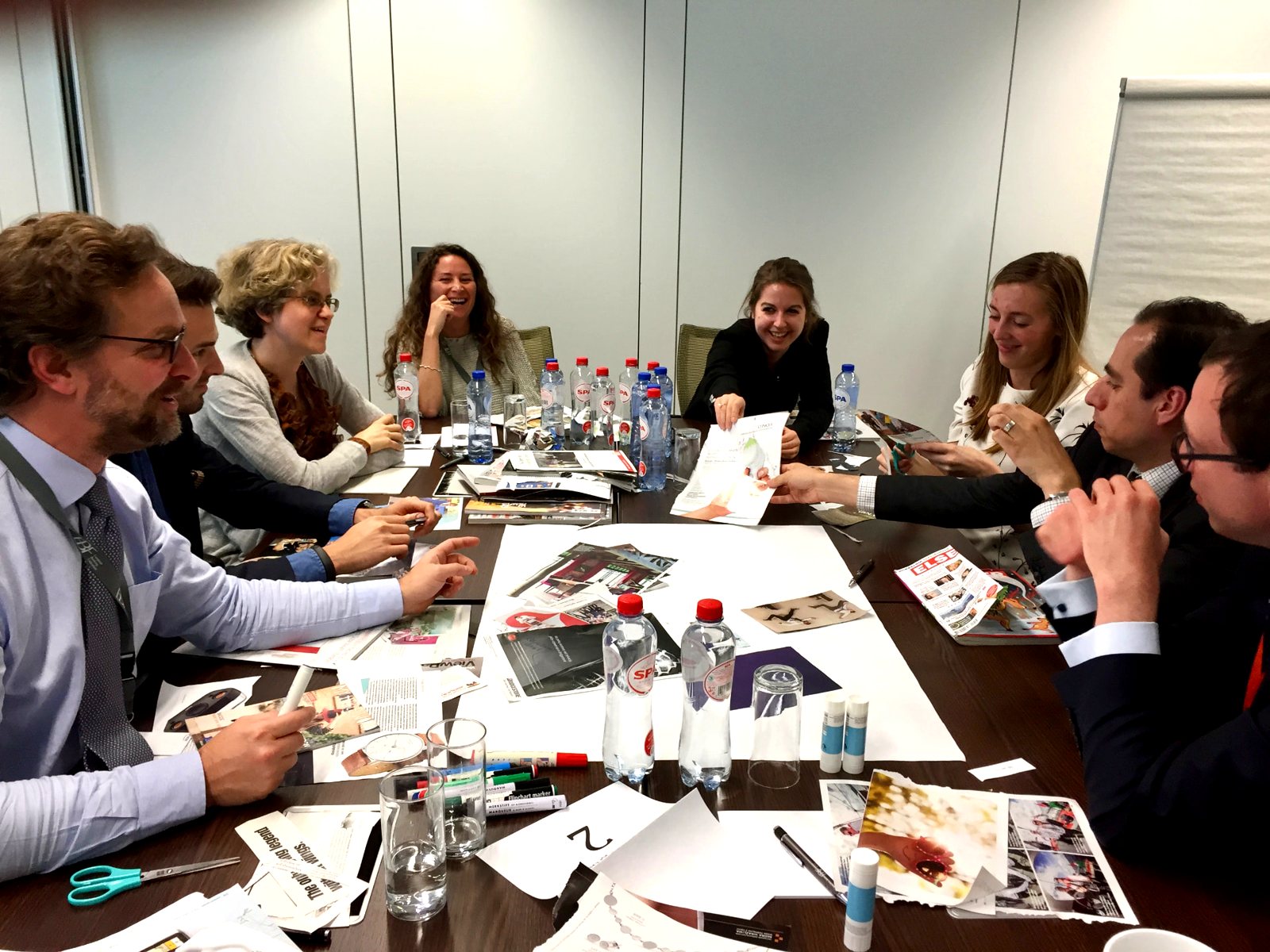
    A #inextremis strategic workshop in Brussels: participants around a boardroom table building a mood board from printed cuttings, magazines and markers

    Frequently asked questions

    Practical questions, answered.

    Is this training?

    Not primarily. It is a working session built around a real organisational question. Capability transfer is part of the process, so the team can reuse the thinking and methods afterwards.

    Can members or partners take part?

    Yes, when the question needs their knowledge, perspective or ownership. We help design the participant mix so that involvement improves the decision rather than diluting it.

    Can the workshop be delivered in person or online?

    Both formats are possible. The right choice depends on the decision, group and working methods.

    How many people should take part, and for how long?

    The format is designed around the decision and the people who need to contribute. We confirm the group size, preparation and duration after a short framing conversation.

    Can #inextremis help afterwards?

    Yes. Follow-through can include synthesis, implementation support, a focused website, publication or video, integrated delivery or a later review point. Your organisation retains ownership of the strategy, editorial choices and final decisions.

    What does your team need to decide together?

    Bring us the decision, tension or point of fragmentation. We will help determine whether a workshop is the right starting point, who needs to be involved and what usable output it should produce.