02 / 09 · The Workshop Advantage
Part 2Define the question before the agenda
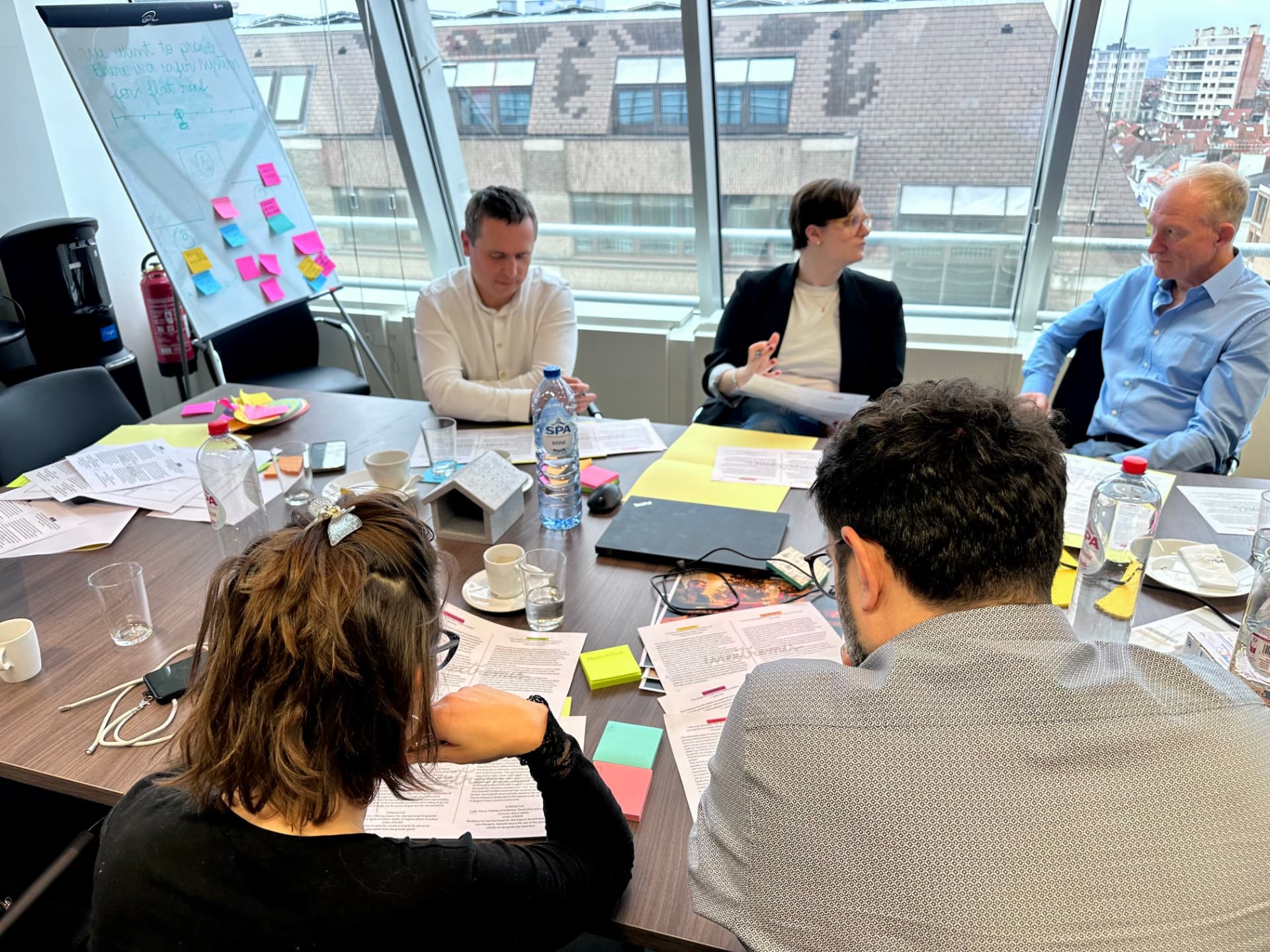
Begin with the client's situation
The first briefing is an inquiry into the work that needs to advance. A client may ask for a creative workshop when the main obstacle is an unresolved objective. Another may request strategic alignment when participants first need a common picture of the current situation. The starting request gives useful information, but it needs to be examined in context.
Ask what has changed, what the organisation is trying to do and where progress is difficult. Establish what previous discussions have produced. Identify the people affected by the question and the decisions already taken. A forthcoming assembly, campaign, publication or organisational change may make the timing important.
This conversation also sets boundaries. The sponsor may have a fixed mandate, budget, timetable or institutional position. Making those conditions explicit gives the collective work a credible space in which to operate. Participants can direct their effort towards matters they can actually influence.
At this stage, the communication manager's knowledge is particularly important. That person often understands both the visible assignment and the relationships that will shape it. An external facilitator needs access to enough of this context to prepare an appropriate process.
Turn a broad subject into a working question
Subjects such as reputation, creativity or member engagement are too broad to determine an agenda. A working question establishes the immediate task. For example: what contribution could members realistically make to a common social media programme? What should a publication help its reader understand? Which priorities should inform the next communication strategy?
A good question permits exploration while keeping the work connected to a practical purpose. It makes clear whose perspective matters and what kind of output is being sought. It can also reveal whether the planned participants are appropriate. If the question concerns implementation capacity, people responsible for implementation need a meaningful place in the process.
Avoid packing several unresolved organisational questions into one session by default. A group may need to assess the situation before it can develop a campaign. It may need a campaign objective before it can explore creative directions. These dependencies should shape the sequence and the expected result.
The workshop can be one stage in a wider assignment. It can equally be a complete, focused intervention whose written report helps the client continue independently. Scope should follow the need established with the organisation.
Review what the organisation already knows
Preparation should begin with existing material. Depending on the assignment, this might include a strategy, previous campaign, member research, website content, publication, brand guide, programme, data or earlier meeting record. The aim is to establish the available evidence and identify what needs attention.
Material should be read for its implications. A previous report may show that contributors organise the organisation's work differently. A campaign calendar may reveal a gap between ambition and available capacity. A website structure may follow internal departments while readers need another route into the information.
Distinguish evidence from interpretation during preparation. A documented result, an individual concern and an untested assumption have different status. The workshop can examine each, but participants should understand which kind of material they are considering.
New research can be useful where an important perspective is missing. It should be proportionate to the question. The briefing and document review may establish that the group already holds enough information to work productively, or that a small amount of additional input is necessary first.
Agree what the workshop should leave behind
An expected result gives the agenda its direction. For a strategic assessment, it might be an organised picture of the current situation and a set of potential priorities. For a creative project, it might be a direction and the criteria against which proposals will be assessed. For a task force, it might be a contribution model and a proposal for responsibilities.
Describe the result at the degree of completion the process can support. An agreed recommendation can be valuable even when formal adoption takes place later. An explicit unresolved question can be useful when it identifies the evidence or authority needed to proceed.
The written report should reflect this distinction. It can record what was established, how perspectives related, which possibilities were developed and what remains open. Its function is to preserve the substance and status of the work so that subsequent readers can use it accurately.
This principle is consistent with the International Association of Facilitators' professional framework, which gives explicit attention to collaborative client relationships, appropriate group processes and useful outcomes. It provides a professional point of reference for designing the relationship between client needs, group work and subsequent use.[2]
Practical tool 2 The workshop framing canvas
Complete this canvas with the client before finalising the agenda. The final column is a working space for the organisation's own answers. Revisit it if the scope or participant group changes.
Framing element | Questions to resolve | Your record |
|---|---|---|
Situation and timing | What needs to move forward, and why now? What has already happened? | |
Working question | What specific question will guide the collective work? | |
Boundaries | Which decisions, constraints and commitments are already established? | |
Expected result | What can realistically be clarified, developed, practised or recommended? | |
Ownership and authority | Who sponsors the work? Who can decide what? What requires later approval? | |
Participants and contributions | Who holds relevant knowledge, responsibility or implementation capacity? | |
Evidence and preparation | Which documents and perspectives are available? What is missing? | |
Report and subsequent use | Who will use the written report, for what purpose and through which next step? |
Develop the agenda with the client
The agenda translates this framing into a sequence of work. Each activity needs a purpose, a form of contribution and a way of capturing what emerges. Time for comparison and consolidation should be planned alongside time for exploration.
Refining the agenda with the client helps test its realism. It can reveal a missing contributor, a sensitive transition or an assumption about what participants already know. The contact's role in further preparation can then be agreed. Some assignments benefit from active collaboration on examples and exercises; others call for more independent preparation by the facilitator.
This is where bespoke design becomes tangible. The common method provides continuity, while the question, evidence, participants and expected result determine the actual workshop.
Source for Part 2
[2] International Association of Facilitators, Core Facilitator Competencies. Professional framework for facilitation practice. Read source