05 / 09 · The Workshop Advantage
Part 5Prepare facilitate and consolidate the work
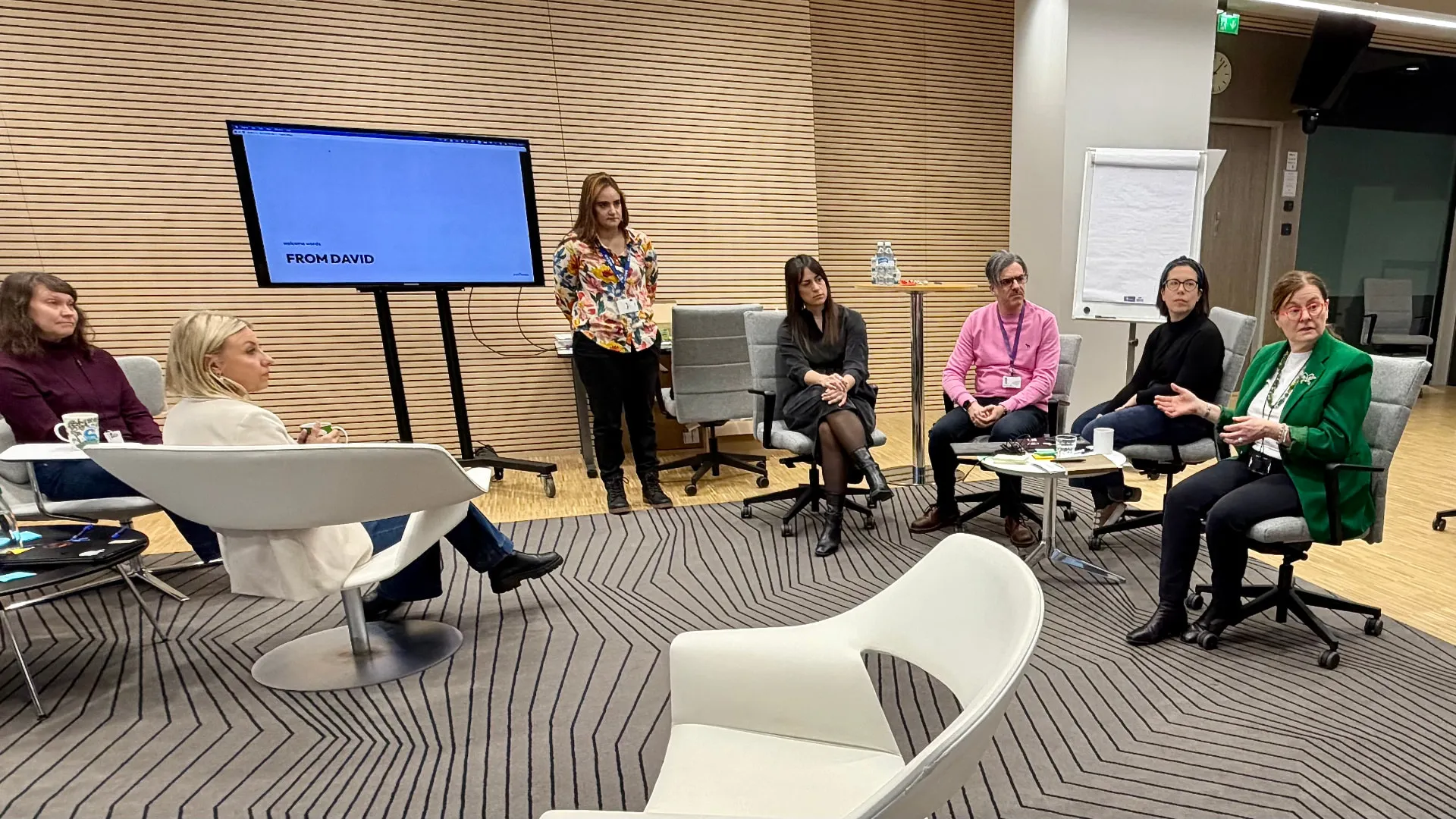
A common process supports bespoke design
An offer can be entirely bespoke while following a consistent professional method. The continuity lies in how the need is understood, the agenda is developed, the work is prepared and the findings are recorded. The content and activities change with the assignment.
In the practice described by #inextremis, the process begins with a client briefing. Existing documentation informs a proposed agenda, which is refined with the client. The workshop is then prepared with the level of active participation by the client contact appropriate to the mission. The team facilitates the session and delivers a written report on its findings and outcomes.
This sequence gives preparation and consolidation a defined place in the service. The client can understand what is being commissioned and where their contribution is needed. It also creates opportunities to adjust the design before participants invest their time in the session.
The six stages are connected. A weakly framed question makes it difficult to select evidence. An agenda designed without knowledge of the group can make the activities unrealistic. A report planned only after the event may lack the material needed to explain what happened. Thinking through the complete process helps each stage support the next.
Prepare activities for the actual participants
An activity should explain what participants are being asked to do, what material they will use and how their contribution will feed the wider task. Instructions can be tested with the client contact where useful. Preparation should anticipate different levels of knowledge and familiarity with the subject.
The appropriate material may be a short evidence pack, selected examples, a content inventory, a set of contrasting references or a practical scenario. Participants need enough context to make a useful contribution. The organiser should distinguish essential preparation from background material so that the request remains manageable.
The client's contact can help identify sensitive language, previous decisions or gaps in the facilitator's understanding. Their involvement in preparing examples and exercises can vary. That level of collaboration should be agreed as part of the scope and reflected in the responsibilities for preparation.
Practical conditions deserve attention too. Room layout, remote participation, language, reading time, breaks and the accessibility of materials affect people's ability to contribute. W3C guidance for accessible events includes asking about accessibility requirements, supplying usable materials and considering the accessibility of activities. These considerations belong in the design stage.[5]
Open the session with a shared understanding of the task
The opening should establish the working question, expected result and boundaries. Participants need to know why they have been invited, how the work will proceed and what will happen to the findings. The sponsor's role and the authority available in the room should be explained.
This gives people a practical basis for judging relevance. They can distinguish an issue that needs attention now from a useful observation to preserve for another stage. It also makes it easier to correct a misunderstanding early. If participants have arrived with conflicting expectations, the facilitator needs to address those expectations before moving into the main activities.
A short opening can invite people to identify the perspective they bring and the question they particularly need the process to consider. The method should respect the time available. Its purpose is to establish the contribution needed for the assignment, rather than require everyone to deliver a general introduction.
Facilitate movement between exploration and consolidation
During exploration, the group needs room to develop observations and possibilities. During comparison, it needs ways to understand their relationship. During consolidation, it needs to establish what can be carried forward and what requires further work.
These movements require different interventions. A broad prompt can open the field. A request for evidence can make an observation more precise. Grouping contributions can reveal patterns. Comparing alternatives against agreed criteria can help the group make a choice or formulate a recommendation.
The facilitator should follow the substance as well as the schedule. A disagreement may reveal the main issue the workshop was meant to address. It may justify adjusting the planned sequence. At the same time, changes should remain connected to the agreed purpose, so that an engaging side discussion does not displace the work required.
Where the facilitator also contributes strategic or creative expertise, that role should be visible. Participants should be able to distinguish a process instruction, a question, an interpretation and a professional recommendation. This transparency allows expertise to add value while keeping the basis of the group's work understandable.
Capture enough to explain the findings
The record should preserve the connection between a conclusion and the material that informed it. Notes, worksheets or other agreed capture methods can support this. Important qualifications should be recorded while the discussion is still fresh.
Before closing, check the status of the main findings with the group. Ask whether a statement reflects an agreement, a proposed direction or an issue requiring further examination. Check who is responsible for carrying a recommendation into the next decision process. This does not require formal approval of every sentence in the room; it establishes the substance the written report must represent.
Close with the next use of the work
The closing should reconnect the session to the initial question. Explain how the report will be prepared and used, including any review agreed with the client. Be clear about the next decision or development stage where one is known.
The report can then provide an accurate reference for subsequent work. Its preparation should be proportionate to the assignment while retaining the distinctions necessary to understand the findings. A well run session and a usable written account support one another: the session generates the substance, and the report makes that substance available beyond the room.
Source for Part 5
[5] W3C Web Accessibility Initiative, Making Events Accessible. Guidance for meetings, conferences, training and presentations in remote, in person and hybrid settings. Read source
The two tools that follow help prepare contributions and preserve the status of outcomes. The participation matrix uses an illustrative common campaign; its roles should be adapted to the actual organisation. The outcomes record can be used across strategic, creative and learning workshops.
Practical tool 3 The participation and contribution matrix
Use one row for each relevant role or group. This illustrative campaign matrix shows the questions to resolve. Replace the entries with the actual roles, authority and arrangements agreed for your workshop.
Role | Relevant knowledge | Contribution required | Authority in the room | Preparation | After the workshop | Participation needs |
|---|---|---|---|---|---|---|
Internal sponsor | Mandate and priorities | Confirm purpose and boundaries | State delegated choices and later approvals | Share established decisions | Carry proposals into governance | Attendance at key stages |
Communication lead | Audiences and delivery | Connect purpose to workable communication | Define communication choices within remit | Share briefs and existing material | Coordinate subsequent work | Time to contribute as well as organise |
Member representatives | National or sector experience | Supply examples and assess practical participation | Clarify what they can commit on behalf of members | Gather relevant evidence | Review proposed contributions internally | Clear terminology and preparation time |
Subject experts | Evidence and technical distinctions | Test accuracy and explain implications | Confirm expertise within their field | Identify sources and limitations | Review technical questions that remain | Material available in advance |
Creative or digital contributors | Narrative form and usability | Develop and compare possible directions | Propose within the agreed brief | Examine references and existing assets | Develop concepts or structures if commissioned | Clear explanation of technical context |
Relevant reviewers | Approval criteria and constraints | Identify review requirements early | State the scope of their approval | Share applicable criteria | Use the agreed review route | Access to evidence and the findings report |
The matrix is a preparation and governance aid. It should help establish the appropriate group and sequence. It does not imply that every listed role must attend every activity.
Practical tool 4 The workshop outcomes record
Use these distinctions when consolidating the session and writing the report. Record the evidence and status needed for a reader who did not attend to understand what can be used, what needs approval and what remains open.
Status | Meaning | What to record | Ownership or next step |
|---|---|---|---|
Established information | A fact or condition supported by identified material | The statement, source and relevant limits | Identify who can clarify or update it |
Interpretation | An explanation or judgement developed from the material | Reasoning and material differences of interpretation | Specify whether further examination is needed |
Option | A possible direction that has been explored | Purpose, potential value and conditions | Identify the comparison or development required |
Recommendation | A proposal to be considered by a responsible person or body | Proposed direction, rationale and remaining conditions | Name the route for consideration and approval |
Decision | A choice made by the person or group with the relevant authority | What was decided, scope and authority | Record responsibility for applying it |
Open point | A question or disagreement that remains unresolved | The issue, why it matters and what is missing | Identify who will pursue clarification |
Subsequent action | A specific piece of subsequent work | Task, intended result and agreed timing where available | Record the responsible person and dependencies |
For a learning workshop, add the methods practised, reference materials used and questions requiring support. For a creative workshop, preserve the criteria and reasoning behind the direction, alongside the exploratory material needed to explain it.