06 / 09 · The Workshop Advantage
Part 6Build capability and shared communication practice
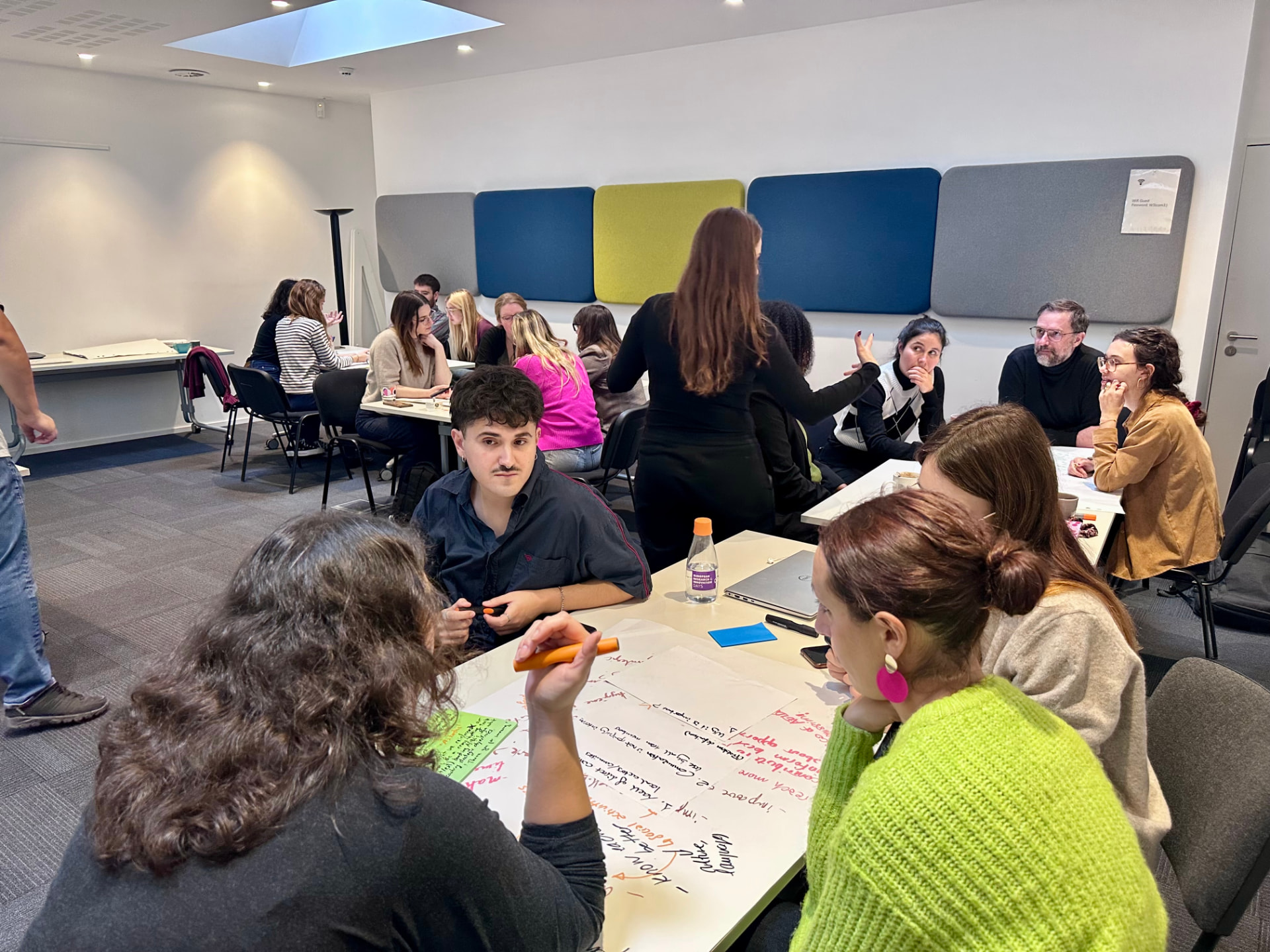
Make methods available to the team
A workshop can help a group complete a piece of work and strengthen its ability to approach similar work again. This learning dimension should be made explicit where it belongs in the brief. The organisation may want participants to practise creative techniques, use shared references or become more confident in commissioning and reviewing communication.
The author's experience includes a creativity workshop for the team of a European association, intended to encourage the use of creative methods inside the organisation. This is a distinct purpose from choosing a creative direction for one project. The work concerns the team's approach to generating and developing ideas.
Designing for this purpose means identifying what participants should be able to do with a method. They may need to formulate a better question, explore alternatives, combine observations or evaluate a proposal. A demonstration can introduce the approach. Practice and feedback give participants an opportunity to understand how it works in their own professional context.
The CDC's Quality Training Standards bring needs assessment, learning objectives, relevant content, learner engagement and feedback into the design of training. They were developed for training in the public health context. Their relevant contribution here is to connect the intended learning with practice and the needs of the people taking part.[6]
Onboarding can align an existing team
Communication onboarding can serve an entire team when an organisation introduces an identity, shared principles or a revised way of working. Experienced colleagues may know their individual responsibilities well while interpreting the wider framework differently.
An onboarding programme can connect that framework to the choices people make. What should an image communicate? How should a publication guide its reader? What does a social media template help organise? How should a video brief explain the intended message? Which changes can a contributor make independently, and which require review?
These questions turn broad principles into professional judgement. Participants can compare the reasoning behind their choices and understand how another person's role affects the result. The aim is to establish a shared basis for working across channels and responsibilities.
The process should recognise differences in experience. Editors, designers, subject experts, project managers and commissioners may need different technical detail. They still benefit from understanding the principles connecting their contributions.
Practice example A modular communication onboarding programme
An anonymised programme designed for a European organisation provides a concrete example. It was prepared for colleagues who create, commission or review communication. Its modules covered the identity, image selection and commissioning, narrative and publications, social media, video, events, presentations, visual information and accessibility.
Each module was designed to introduce the relevant principles, provide a prepared exercise and allow questions. Participants could attend the sessions relevant to their responsibilities without depending on attendance at earlier modules. Applicable guides, templates and review checklists supported the work.
The planned exercises included preparing a short brief, organising supplied publication content, taking part in a simulated editorial meeting, building an editorial calendar, examining a storyboard and improving a slide sequence.
This modular approach gives the organisation a way to combine a common framework with participation suited to each role. It also makes the preparation concrete: each session needs its own material, instructions and reference information.
Develop the ability to commission and review
Communication capability extends beyond making an asset. People need to explain what they require, recognise an appropriate proposal and provide useful feedback. A workshop can develop these abilities through exercises close to their responsibilities.
A commissioning exercise can ask participants to translate a communication need into a brief. A review exercise can ask them to explain which parts of a proposal support the intended message and which need attention. A comparison exercise can make criteria visible by asking participants to examine several possible approaches.
These tasks reveal the distinction between knowing a rule and using it in context. They also give the team a common language for conversations with internal colleagues and external specialists. The relevant question is whether participants can apply the reference information to a real communication judgement.
Reference material should remain available afterwards. A guide, template or checklist is more useful when people understand when to consult it and how it supports a choice. Workshop exercises can make that relationship visible.
Use technology with an explicit purpose
Digital tools can support preparation, remote contribution and the capture of workshop material. Their selection should follow the participants' needs and the information involved. A sophisticated shared board adds little if participants cannot use it comfortably or access its content.
Where the organisation permits the use of AI, it may be considered for tasks such as proposing alternative wording, preparing an exercise or producing an initial grouping of material. A responsible person still needs to compare the result with the source and check whether qualifications or differences have been lost.
The same principle applies to transcripts and automated summaries. The organisation needs agreed arrangements for the information being processed, the systems used and the people who can access it. The report remains a professional act of interpretation requiring human review.
Assess a supporting tool by how well it serves the work: whether participants can use it, whether its contribution is accurate and whether the organisation can retain appropriate control of its information.
Combine internal ownership with external expertise
An external partner can bring preparation, facilitation, strategic challenge and creative experience. Internal participants bring the mandate, organisational knowledge, relationships and responsibilities needed to use the work. Their combination should strengthen the communication lead's ability to direct the assignment.
The appropriate relationship is established in the briefing. The client needs to know what the partner will prepare, how their own contact will contribute and what the report will cover. The partner needs enough context to understand the organisation's question and work accurately with its material.
Subsequent support can be agreed where it is useful. A workshop may lead into campaign development, a publication, a website or another project. It can also conclude with a report that the client takes forward independently. A proportionate scope gives the client a clear choice about the next stage.
Source for Part 6
[6] Centers for Disease Control and Prevention, Quality Training Standards. Used for the stated principles of needs assessment, learning objectives, relevant practice and feedback. Read source