03 / 09 · The Workshop Advantage
Part 3Align members partners and organisations
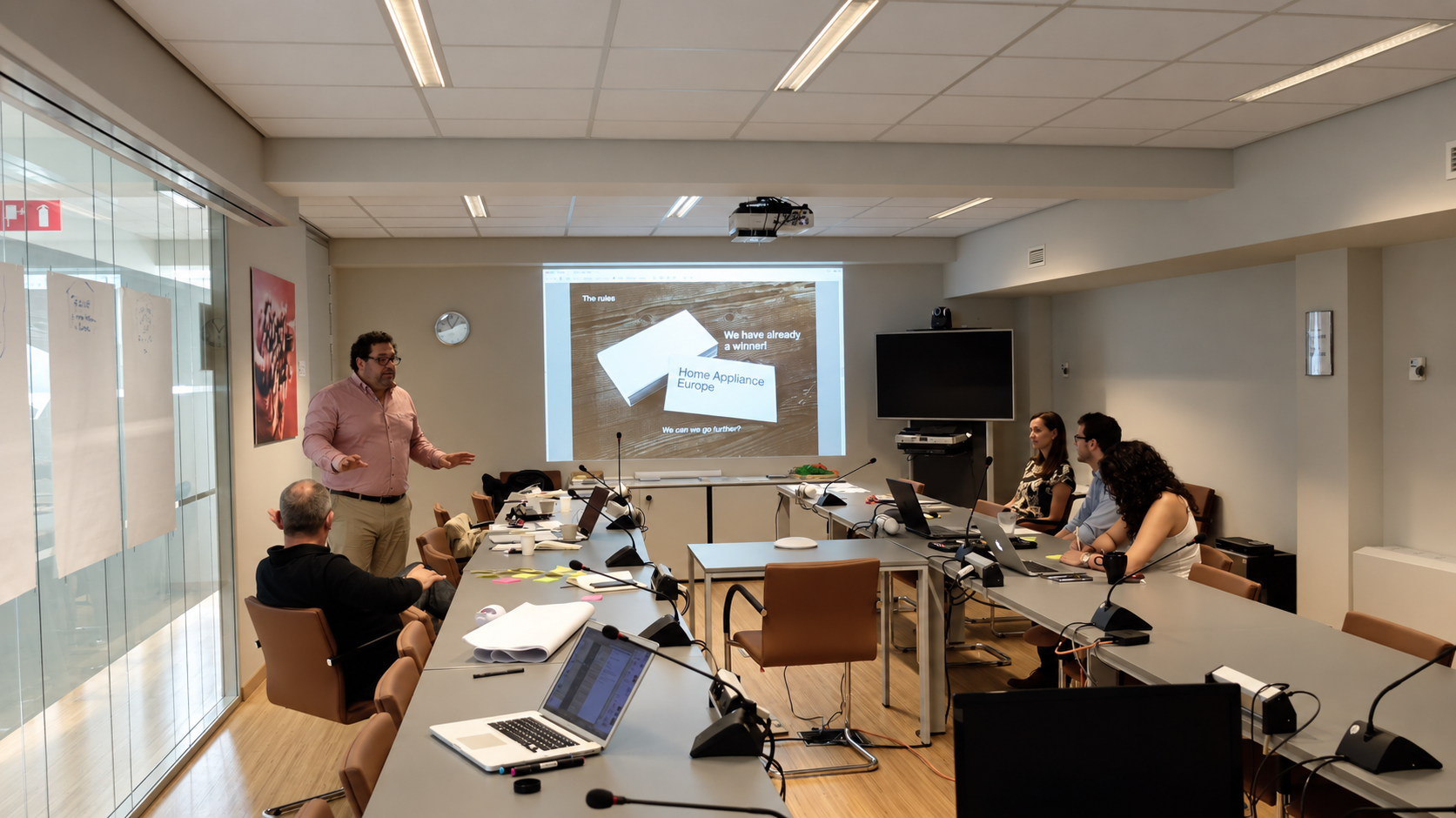
Shared communication begins with different perspectives
European communication frequently depends on people whose interests overlap without being identical. National members may recognise the same European issue through different circumstances. Partner organisations may support a campaign while bringing different mandates. An internal team may share an objective but disagree about the emphasis, evidence or resources it requires.
A workshop can give these differences a useful form. Participants need to understand where their views converge, where they differ and what those differences mean for common action. Alignment can concern a shared objective, an agreed division of responsibilities, a set of communication principles or a proposal to be taken forward.
The scope matters. Partners can agree a common campaign while retaining their own identities and positions on other issues. Members can contribute through different channels according to their capacity. An association can establish a common direction while preserving a record of points that require further discussion.
The facilitator's role is to help the group work at the level of agreement the assignment actually needs.
Make representation and authority visible
People can attend in several capacities. A participant may offer personal expertise, speak for a team, represent a member organisation or hold formal authority to approve a proposal. These roles should be established rather than inferred from seniority or job title.
This becomes especially important when several organisations are involved. Attendance alone cannot establish that every organisation has adopted the outcome. The process needs to specify what representatives can agree in the room and what they must take back for internal review.
It can help to separate contributions by function. Ask who can provide evidence, who can explain audience needs, who will implement the work and who can authorise the relevant choices. One person may perform several functions. The purpose is to identify the authority and knowledge needed, without making every participant responsible for every decision.
The communication lead should also know how the result will enter existing governance. A workshop can prepare a clear recommendation for a committee or board. The report can make that recommendation easier to examine by explaining its basis and identifying remaining questions.
Give differences a structure
Open discussion can reveal important concerns, but it may leave the relationship between them unclear. A structured sequence can begin with individual perspectives, move to comparison in smaller groups and then examine implications together. This gives people time to formulate their contribution before responding to the dominant language of the room.
The choice of sequence depends on the group and question. Written contributions may help participants working in a second language. Specific prompts can help technical experts explain the relevance of an observation. Smaller groups may make it easier to explore differences before bringing a concise account to the full group.
When views conflict, ask what lies behind them. Is the disagreement about evidence, interpretation, organisational interest, timing or feasibility? Different causes need different responses. More evidence may resolve one question. A decision by the sponsor may be needed for another. Some differences can remain compatible with a common campaign if their implications are understood.
The written record should preserve material differences accurately. A facilitator's synthesis should make the discussion easier to use while retaining qualifications that could change the meaning of an apparent agreement.
Practice example A shared campaign across organisational boundaries
The author's workshop experience includes sessions bringing together several organisations, and sessions involving different members of the same European association, to align perspectives around a common communication campaign. The task was to establish a basis for common work across these boundaries.
The design implication is clear. A shared campaign needs an explicit common space. Participants should know which objective they are developing together, what each organisation can contribute, which parts of the communication must remain coherent and where adaptation is appropriate.
The workshop can explore those relationships before detailed production. The subsequent report can record the common basis, contributions proposed and points requiring further authorisation. It can also help people who were absent understand how the proposal developed.
From willingness to practical participation
The same logic applies to member engagement on social media. Asking members to participate raises operational questions. What material can they contribute? Who can provide examples or expertise? Which voices are appropriate? What review is necessary? How will the association's team coordinate the work?
In one workshop described by the author, members of a European association worked on constituting a social media task force with the aim of creating meaningful engagement around the association's channels. This is a useful example of participation as an organisational design question.
For such work, the expected result can be a practical contribution model. It may identify responsibilities, an editorial logic and an initial sequence for testing the approach. The organisation can then assess whether the proposed roles match the members' actual availability and ability to contribute.
Engagement remains a subsequent result to examine. Creating a task force establishes a basis for coordinated work; its operation needs to be observed through the quality, consistency and usefulness of the contributions that follow.
Participation needs a credible purpose
The OECD's guidelines for citizen participation start from the existence of a meaningful space for contribution and the definition of expected results. Their subject is public participation in policymaking, rather than agency workshops. The relevant connection is the need to explain what participation can influence and how its contribution will be used.[3]
For a communication workshop, this means being candid about the purpose, boundaries and next step. Participants can invest their attention more deliberately when they understand the task and the status of what they are helping to produce.
Source for Part 3
[3] OECD, OECD Guidelines for Citizen Participation Processes, 2022. Used for the stated participation principle, with the difference in context acknowledged above. Read source
Related agency work: EUMEPS communication programme and member workshops.